




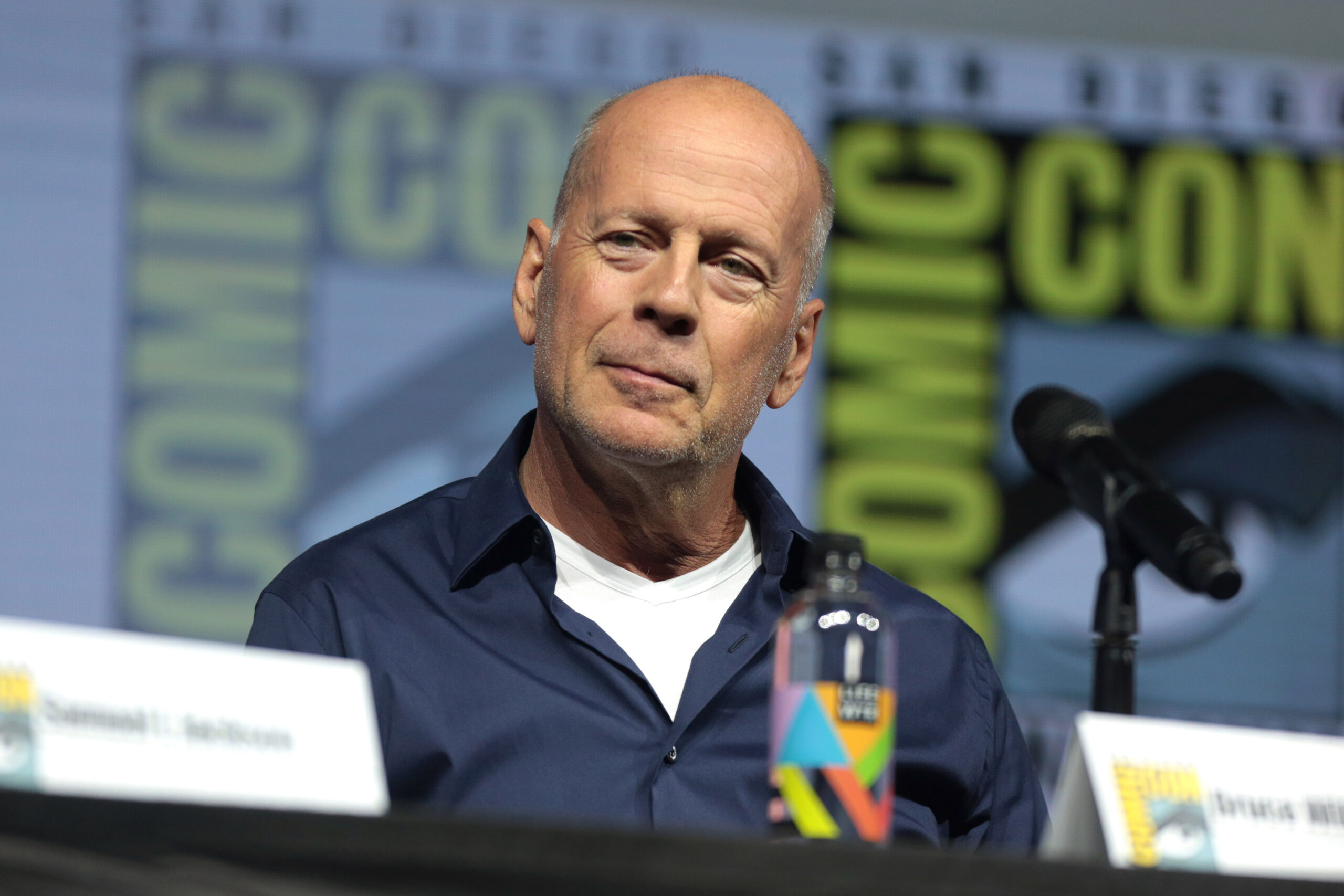
Image: Gage Skidmore from Peoria, AZ, United States of America, CC BY-SA 2.0, via Wikimedia Commons
A Star Dimmed by a Rare and Cruel Disease
Hollywood icon Bruce Willis, once synonymous with action-packed heroism and razor-sharp one-liners, now faces a very different kind of battle, one that scripts no comebacks or heroic endings. Diagnosed with frontotemporal dementia (FTD), Willis’s condition has progressed rapidly, leaving him unable to speak, read, or walk, according to recent updates from his family.
The diagnosis was first publicly revealed in February 2023, following a prior announcement in 2022 that Willis was stepping away from acting due to aphasia, a language disorder. What was initially attributed to speech impairment has since developed into a full-blown case of FTD a rare, aggressive, and deeply debilitating neurological disorder.
What Is FTD?
Frontotemporal dementia is not Alzheimer’s, though the two are often confused. FTD is unique in that it typically strikes between ages 45 and 65, and it targets the frontal and temporal lobes of the brain regions responsible for behavior, decision-making, language, and emotion.
Key Symptoms Include:
- Loss of empathy and social awareness
- Language difficulty (progressive aphasia)
- Behavioral shifts such as apathy or compulsive actions
- Motor challenges, often resembling Parkinsonism
There is no known cure. Treatment focuses on symptom management, often with the support of speech therapists, occupational therapists, and structured care environments.
Willis’s family, led by his wife Emma Heming Willis, ex-wife Demi Moore, and their children, has taken a proactive role in advocating for FTD awareness. “Bruce always believed in using his voice to help others,” Emma shared in an emotional interview. “Even in silence, his journey now speaks volumes.”
Their openness has ignited global conversations about the underreported nature of FTD, which accounts for 10% to 20% of dementia cases but remains poorly understood among the general public.
The family has partnered with organizations such as the Association for Frontotemporal Degeneration (AFTD) to raise awareness and funding for research, hoping to illuminate a path for others affected.
From Die Hard to The Sixth Sense, Willis delivered performances that etched him into cinematic history. But beyond the screen, his latest role that of an unintentional advocate for neurological illness may prove to be his most powerful.
His story highlights the silent, often invisible toll of neurological diseases on both patients and families. For many, Willis’s struggle has become a painful but necessary lens through which to better understand early-onset dementia.
Experts emphasize the urgency of recognizing the signs of FTD early and supporting research into its causes. Despite affecting an estimated 50,000–60,000 people in the U.S. alone, FTD remains underfunded and underdiagnosed.
Willis’s case shines a necessary spotlight on this disease, urging society to move beyond celebrity sympathy and into policy support, healthcare funding, and destigmatization.
Bruce Willis may have delivered his last line on screen, but in the arena of public health, his story is still unfolding. His battle with FTD is no movie, it’s reality millions quietly face. And thanks to the bravery of his family and the raw honesty of their updates, the world is finally starting to listen.