





Image Credit: TechCrunch, CC BY 2.0, via Wikimedia Commons
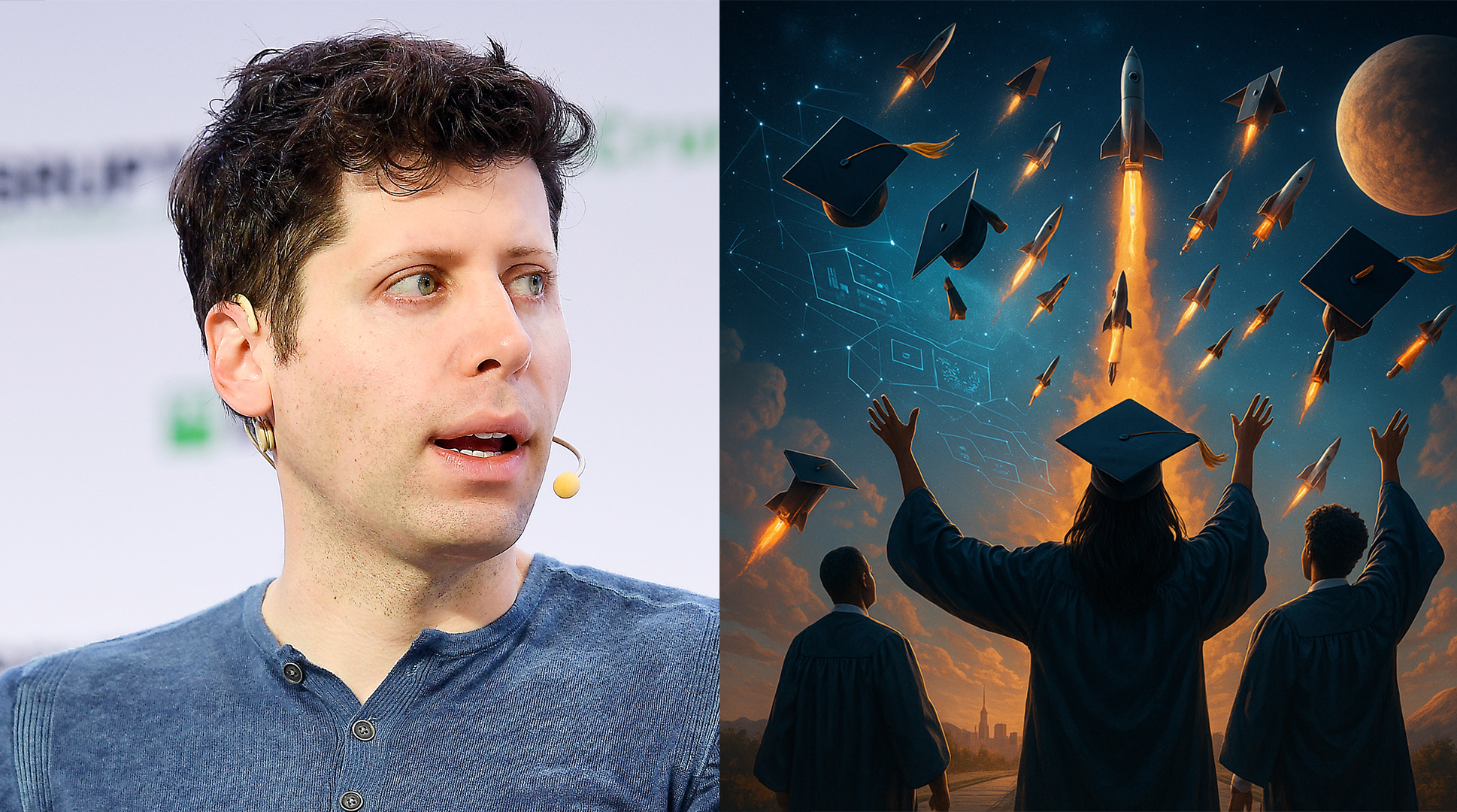
A vision of the future, OpenAI CEO Sam Altman says that within a decade, fresh college graduates could be stepping off campus and onto a spaceship headed for “super well-paid, super interesting” jobs in space.
Speaking in a recent interview with video journalist Cleo Abram, Altman painted a picture of a radically transformed job market, one in which space exploration is not just the domain of astronauts but a viable, high-paying career path for a new generation.
“In 2035, that graduating college student, if they still go to college at all, could very well be leaving on a mission to explore the solar system on a spaceship in some completely new, exciting, super well-paid, super interesting job,” Altman said.
The billionaire entrepreneur, who has been at the forefront of the AI revolution, admitted he feels “envious” of young people starting their careers now predicting they will look back at today’s jobs as “really boring, old work.”
AI’s Impact on the Future Workforce
Altman’s prediction comes amid broader speculation about how artificial intelligence will reshape the global job market. While acknowledging that AI will wipe out some roles entirely, he believes it will also create unprecedented opportunities.
This vision aligns with comments from other tech leaders:
- Bill Gates told The Tonight Show earlier this year that AI could eventually enable a two-day workweek.
- Nvidia CEO Jensen Huang has said AI is already giving his team “superhuman” abilities.
- Mark Cuban suggested AI could even create the world’s first trillionaire, possibly “just one dude in the basement.”
According to the U.S. Bureau of Labor Statistics, aerospace engineering jobs are already growing faster than the national average, with salaries exceeding $130,000 annually a trend that could accelerate if private space travel and Mars exploration projects expand in the 2030s.
Beyond space, Altman believes AI will make it possible for one-person companies to achieve billion-dollar valuations.
“It is probably possible now to start a company… that will go on to be worth more than a billion dollars, and more importantly… deliver an amazing product and service to the world,” he told Abram.
This, he says, is thanks to AI models like the recently released GPT-5 which he describes as equivalent to “a team of PhD-level experts” available in your pocket.
POV: Why This Matters for South Africa
For South African graduates, Altman’s vision offers both a challenge and an opportunity. AI adoption, combined with Africa’s growing space science sector, could place local talent in global industries once thought out of reach. The South African National Space Agency (SANSA) has already positioned itself in Earth observation and satellite technology meaning the leap to broader space roles might not be far-fetched.
The question is whether the country will adapt its education, infrastructure, and policy fast enough to ensure its youth can compete for these “super well-paid” jobs in the decade ahead.